Biochemistry
Biochemistry emerged in the 19th century from the recognition that life obeys chemical law. Early pioneers demonstrated that metabolism, fermentation, and nutrition could be explained through the same principles that govern laboratory reactions. In the 20th century, the molecular structures of proteins, nucleic acids, and metabolic pathways were resolved with increasing precision. The discovery of ATP as the energy currency of the cell, the mapping of glycolysis and the Krebs cycle, and the decoding of the central dogma (DNA → RNA → protein) established a powerful framework: life as a network of molecular machines driven by thermodynamics and regulated through feedback.
This molecular paradigm has been enormously successful. Yet its explanatory strength lies primarily in decomposition—identifying parts, pathways, and interactions. It describes how energy gradients power ATP synthase, how enzymes stabilize transition states, and how signaling molecules transmit information. What remains less clear is how coherence is sustained across scales. Cells maintain order in thermodynamic openness. Enzymes achieve remarkable specificity and timing. Biological systems regenerate structure and function in ways that appear choreographed rather than accidental. Even systems biology, while mapping interaction networks, does not fully explain how dynamic unity emerges from distributed molecular events.
Resonant Biochemistry (RB) proposes that this missing dimension is geometric coherence. Life is not merely chemistry in motion; it is chemistry organized by resonant field structure. Mitochondria and chloroplasts function as energy-organizing oscillatory systems. Enzymes act as resonance filters that phase-lock substrates into temporally precise transformations. Biomolecules such as glucose can be understood as stable geometric energy-storage patterns. In this framework, classical biochemistry is preserved but embedded within a deeper physical logic: molecular interactions occur within structured fields that guide, synchronize, and stabilize biological function.
This shift reframes core domains of the discipline. Bioenergetics becomes the study of harmonically coordinated energy flow. Enzymology becomes the study of phase-locked catalytic timing. Signal transduction becomes the emergence of global coherence from local resonant events. Disorders of metabolism and regulation can be interpreted as breakdowns of field alignment rather than merely molecular malfunction.
The Cell as a Resonant System
Standard Model View
The cell is understood as a network of chemical reactions organized into signaling pathways. External signals bind to receptors, triggering cascades of molecular interactions inside the cell. Information is transmitted through diffusion, enzyme activation, and regulatory feedback loops. Cellular behavior emerges from the coordinated activity of these biochemical components.
UFD View
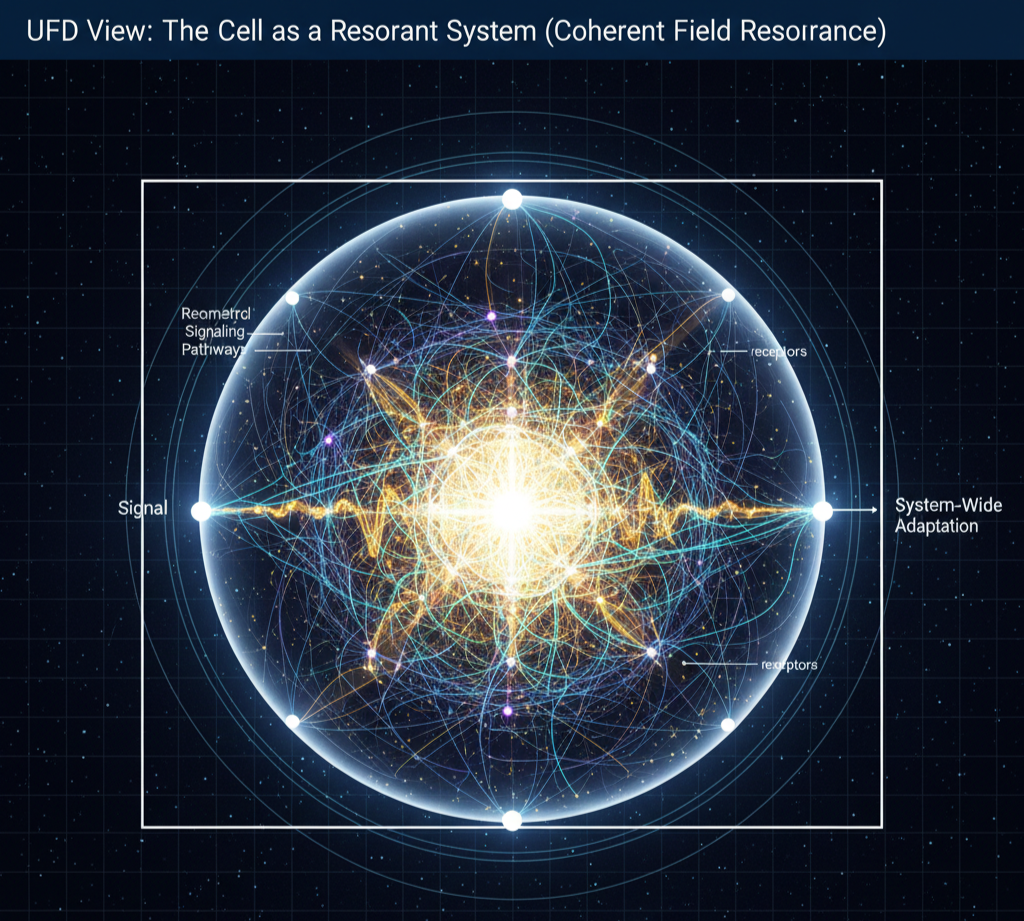
The cell is a structured, resonant architecture embedded in interacting fields. Molecular components function as geometrically tuned elements within a coherent system. Signals propagate not only through chemical diffusion but through shifts in resonance that travel across structured pathways. A cellular response is a coordinated change in field coherence, allowing rapid and unified system-wide adaptation.
Cell Membrane
Standard Model View
The cell membrane is a lipid bilayer that separates the cell from its environment. Embedded receptors bind specific ligands, initiating intracellular signaling cascades. The membrane potential regulates ion flow and electrical activity.
UFD View
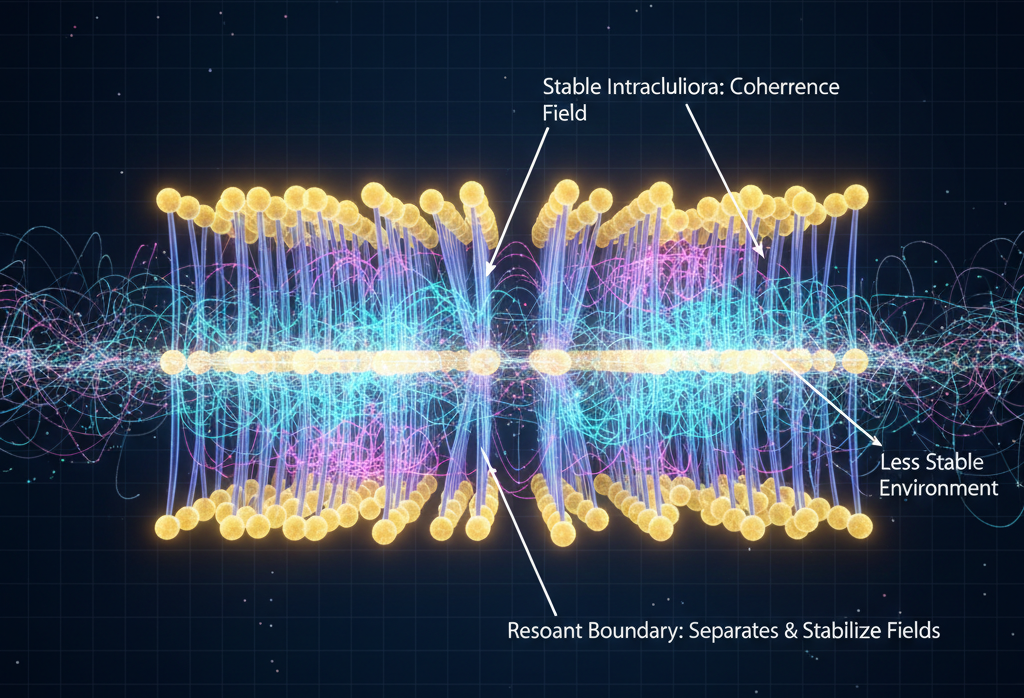
The membrane functions as the cell’s primary resonant boundary. Its lipid structure stabilizes the intracellular field environment, while receptors act as frequency-selective interfaces. Ligand binding is a phase-coupling event that shifts the receptor’s resonant state, initiating a coherence change that propagates inward.
Cytoskeleton
Standard Model View
The cytoskeleton is a network of microtubules and filaments that provides structural support and enables intracellular transport. It organizes organelles and assists in cell division and motility.
UFD View
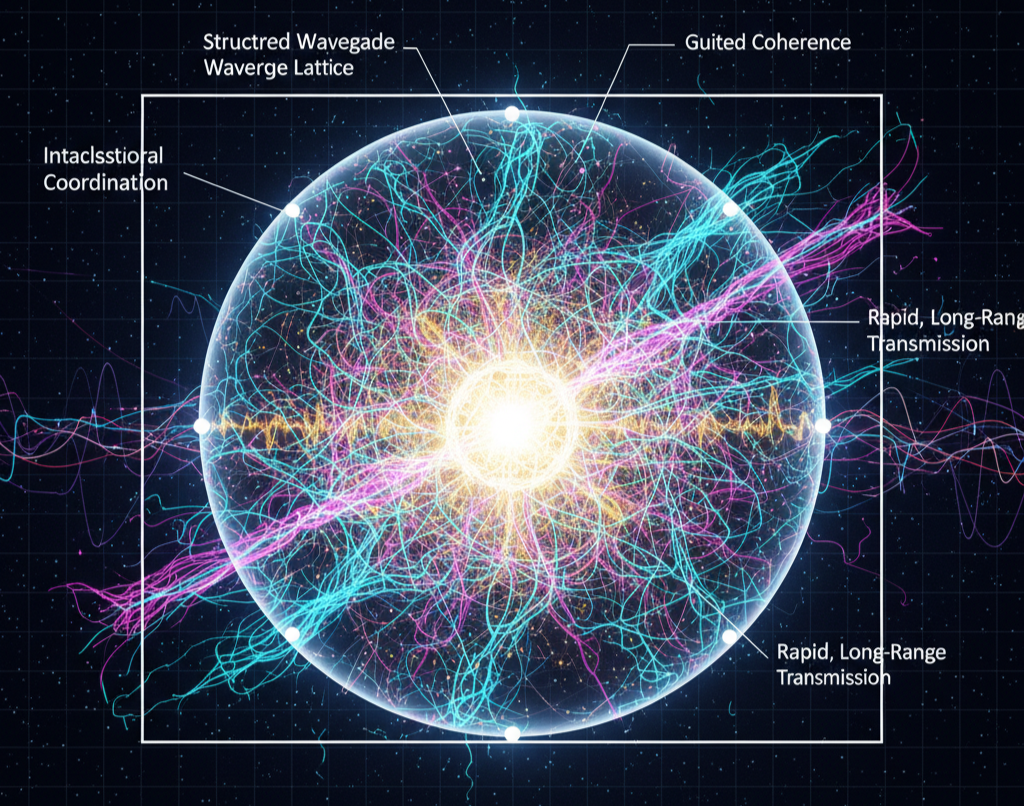
The cytoskeleton serves as a structured waveguide for coherent vibrational modes. Its ordered geometry enables rapid, long-range transmission of resonance shifts across the cell. Rather than relying solely on diffusion, intracellular coordination occurs through guided coherence along this structural lattice.
Enzymes
Standard Model View
Enzymes are biological catalysts that accelerate chemical reactions by stabilizing transition states. Their specificity arises from the geometric complementarity between enzyme and substrate.
UFD View
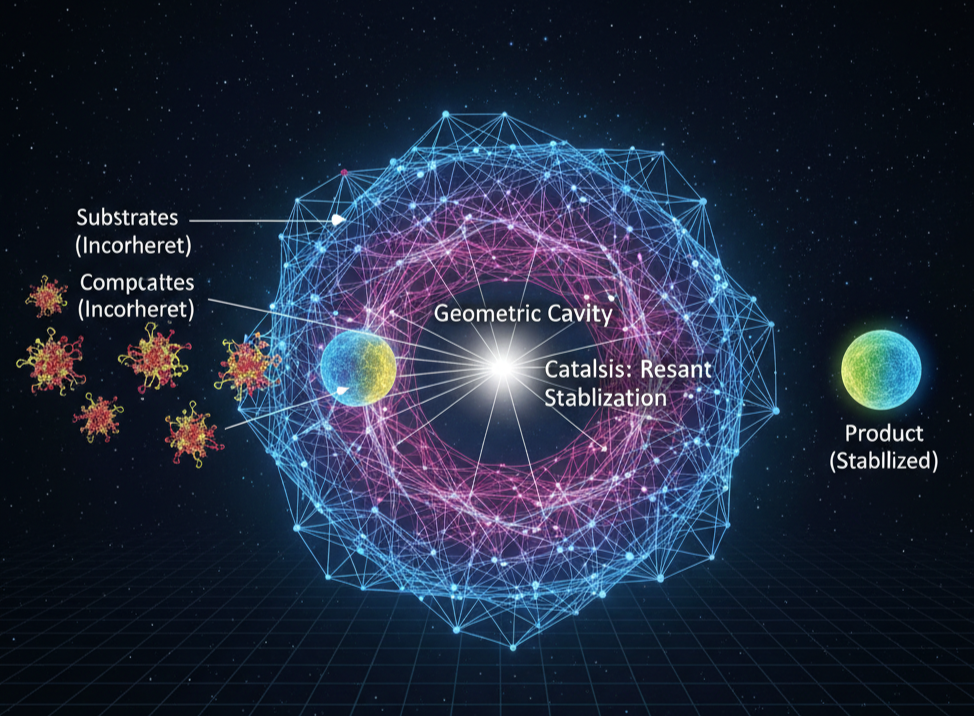
Enzymes function as resonance filters. Their three-dimensional structure creates tuned geometric cavities that selectively phase-lock with compatible molecular vibrational modes. Catalysis occurs when substrates are drawn into coherent alignment within this field geometry, lowering energetic barriers through resonant stabilization.
Photosynthesis
Standard Model View
Photosynthesis is the biochemical process by which plants, algae, and certain bacteria convert sunlight into chemical energy. Light is absorbed by pigment molecules such as chlorophyll within the light-harvesting complexes of chloroplasts. This energy is transferred to a reaction center, where it drives electron transport, generates a proton gradient, and powers ATP synthesis. The resulting ATP and NADPH are then used to fix carbon dioxide into sugars like glucose. In this framework, photosynthesis is a sequence of photochemical reactions that convert radiant energy into stored chemical potential.
UFD View
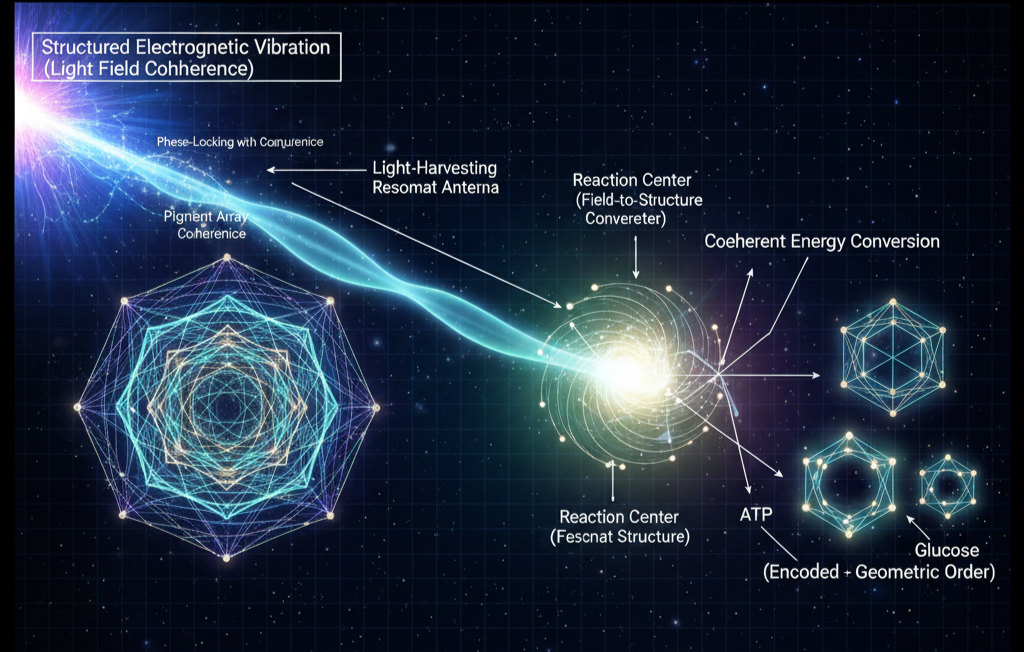
Photosynthesis is a process of field capture and coherent conversion. Light is not merely fuel but structured electromagnetic vibration. The light-harvesting complex functions as a geometrically tuned resonant antenna that phase-locks with specific frequencies of the electromagnetic field. Rather than random excitation and transfer, energy propagates through the pigment array as a coherent resonance pattern until it reaches the reaction center.
The reaction center acts as a field-to-structure converter. Incoming coherence is stabilized into charge separation, proton gradients, and ultimately molecular geometry. ATP and glucose are not simply energy carriers; they are resonant structures in which captured field coherence has been slowed and encoded into stable bond configurations. Photosynthesis therefore represents the transformation of radiant field coherence into stored geometric order—vibration recorded in molecular form.
Metabolism
Standard Model View
Metabolism is the totality of chemical reactions that sustain life. It consists of two coordinated processes: catabolism, which breaks down molecules to release energy, and anabolism, which uses that energy to build complex biological structures. Pathways such as glycolysis, the Krebs cycle, and the electron transport chain convert nutrients into ATP, the cell’s primary energy currency. In this framework, metabolism is a network of enzyme-driven reactions governed by thermodynamics and regulated by feedback control.
UFD View
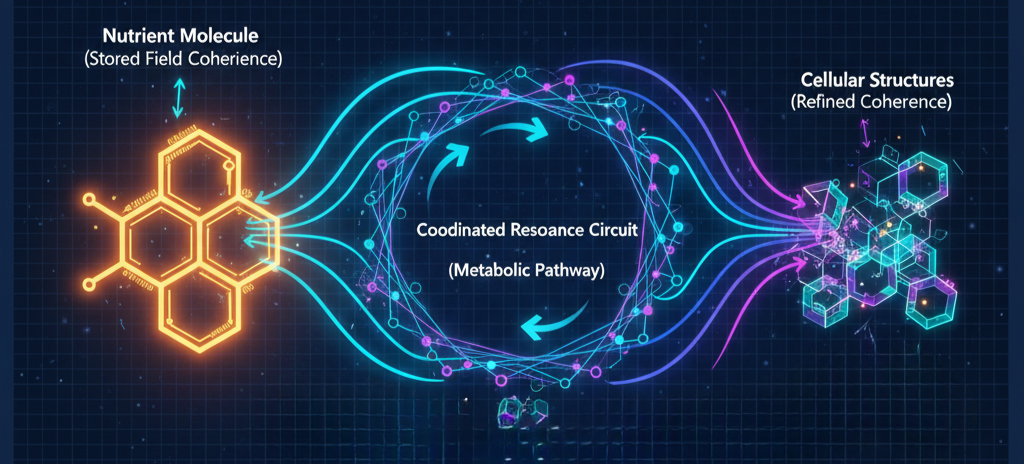
In UFD, metabolism is the controlled transformation and redistribution of stored field coherence. Nutrient molecules such as glucose are not merely fuel; they are structured geometries in which electromagnetic resonance has been stabilized into chemical form. Catabolism progressively releases this stored coherence through staged geometric refinements, exporting it into high-order carriers such as NADH and ATP.
Metabolic pathways function as coordinated resonance circuits rather than isolated reaction chains. Each step reduces geometric strain, redistributes vibrational energy, and preserves coherence while minimizing dissipation. Anabolism then reinvests this refined coherence into new molecular architectures. Metabolism, in this view, is the dynamic cycling of resonance through matter—capturing, refining, storing, and redeploying coherent structure within the living system.
Homeostasis
Standard Model View
Homeostasis is the maintenance of stable internal conditions through regulatory feedback mechanisms. Hormonal signaling, neural control, enzyme activity, and immune responses adjust temperature, pH, glucose levels, and other physiological variables. Stability emerges through biochemical monitoring and correction systems that counter deviations from set points.
UFD View
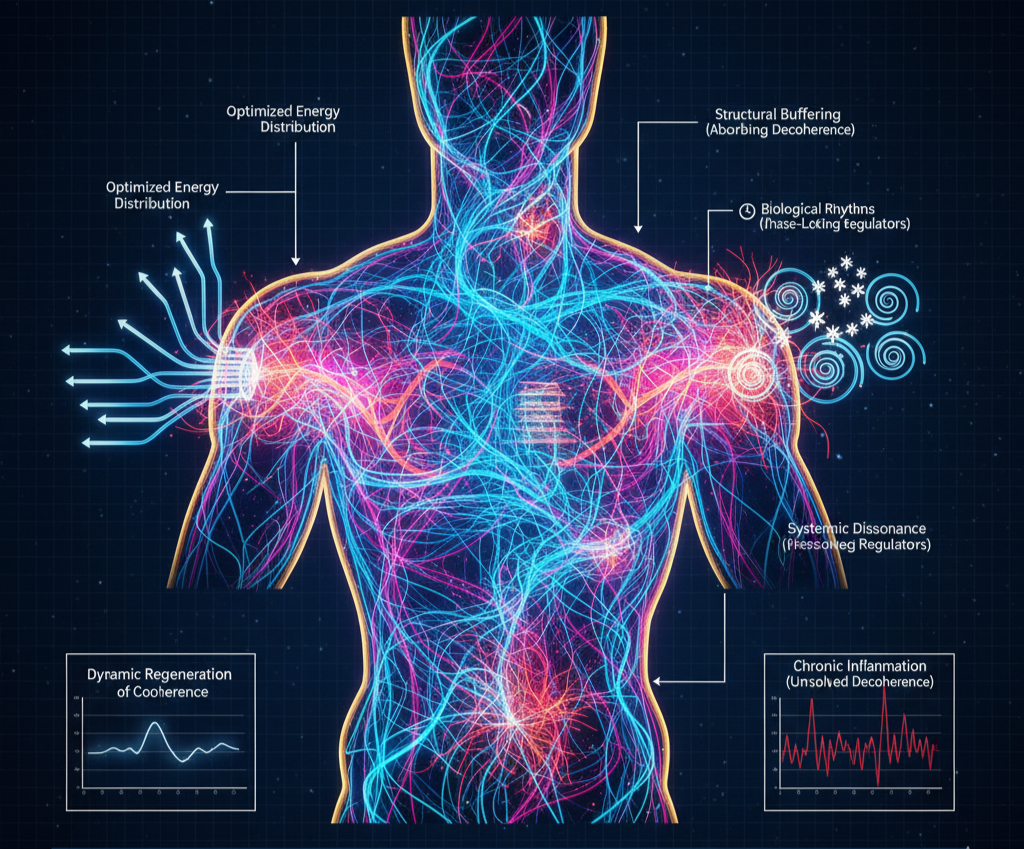
In UFD, homeostasis is the preservation of field coherence within an oscillatory, energy-driven organism. Rather than merely adjusting chemical concentrations, the body continuously manages the distribution, phase alignment, and synchronization of vibrational energy across tissues and systems. This process—Resonance Management—maintains coordinated flow while buffering local disruptions before they destabilize the whole.
Coherence is sustained through three interlocking mechanisms: optimized spatial and temporal energy distribution; structural buffering systems (membranes, water structuring, phase-separated domains) that absorb localized decoherence; and biological rhythms—circadian cycles, calcium waves, redox oscillators—that act as phase-locking regulators across scales. When these coherence mechanisms fail, the result is systemic dissonance, experienced biologically as inflammation.
Within this framework, the immune system functions as an agent of resonant repair. Immune cells respond not only to pathogens or damage but to regions of vibrational incoherence. Acute inflammation represents a targeted attempt to restore structural harmony. Chronic inflammation reflects unresolved decoherence, where local instability persists and propagates. Health, therefore, is not static balance but the dynamic regeneration of coherence under continual energetic flux.
Cancer
Standard Model View
Cancer is understood as a disease driven primarily by genetic mutations that disrupt normal cell-cycle regulation, apoptosis, and signaling pathways. These mutations enable uncontrolled proliferation, metabolic reprogramming, tissue invasion, and resistance to regulatory feedback. Tumor growth is often accompanied by altered metabolism, including the Warburg effect, in which cancer cells preferentially rely on aerobic glycolysis rather than oxidative phosphorylation. In this framework, cancer is a molecular and genetic disorder arising from accumulated cellular damage and dysregulated growth control.
UFD View
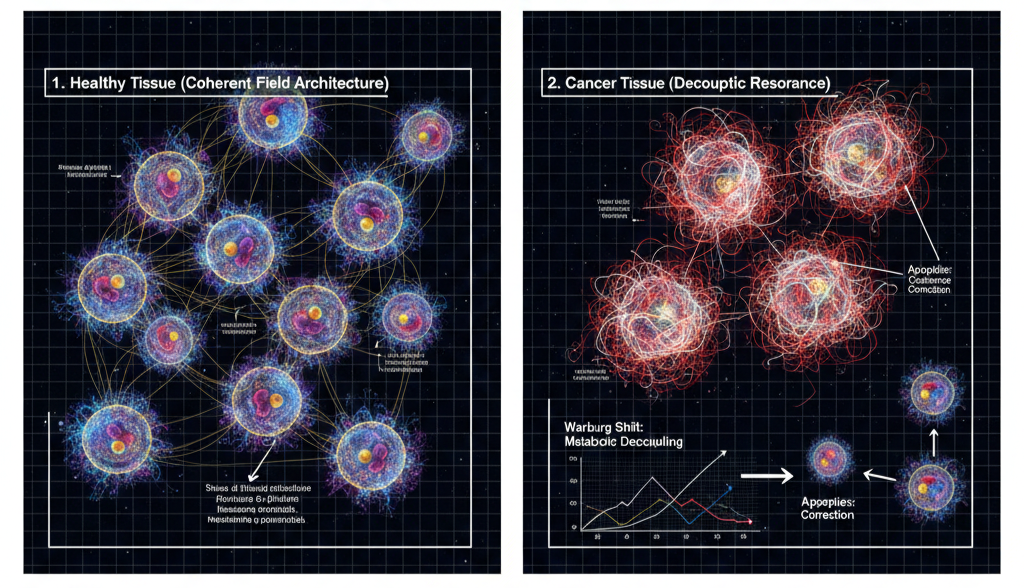
In UFD, cancer represents a breakdown of coherent field architecture across cellular and tissue scales. Health emerges from phase alignment between mitochondria, cytoskeleton, membrane potentials, and surrounding tissue fields. Cancer cells lose this alignment and enter self-sustaining attractor states that are energetically decoupled from normal tissue coherence. Rather than remaining synchronized within the larger biological network, they operate in localized, low-coherence oscillatory modes.
Metabolic rewiring, including the Warburg shift, reflects this decoupling. Oxidative phosphorylation depends on synchronized mitochondrial oscillators; when mitochondrial coherence degrades, cells revert to less ordered but more proliferative energy pathways. Structural disorganization of mitochondria, cytoskeletal disruption, altered membrane polarization, and resistance to apoptotic signaling all reflect a collapse of coordinated resonance.
From this perspective, tumors are not only proliferative masses but regions of localized decoherence within tissue fields. Apoptosis in healthy tissue functions as a coherence-correction mechanism, removing cells that fall out of synchrony. Cancer cells evade this regulatory entrainment and persist in metastable energetic states.
Therapeutically, this reframes cancer as a problem of restoring coordination rather than merely eliminating cells. While genetic and biochemical mechanisms remain central to treatment, UFD suggests that future approaches may benefit from understanding how metabolic organization, mitochondrial integrity, and tissue-level synchronization contribute to cellular stability. Cancer, in this view, is a coherence disease—an instability of biological field architecture across scales.
*Images were generated with the assistance of Gemini